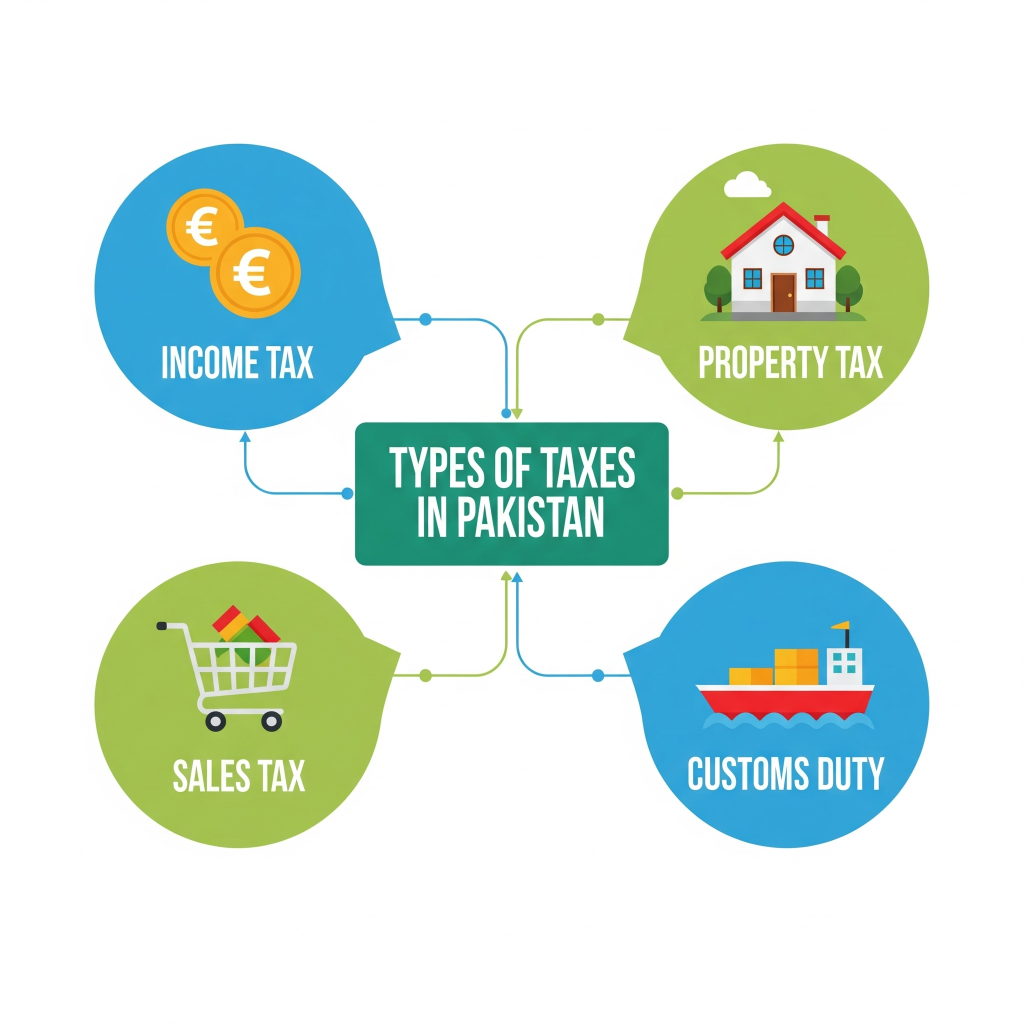
Sales Tax (GST) in Pakistan: Complete Guide for Business Owners
Running a business in Pakistan means dealing with the Federal Board of Revenue (FBR) and provincial revenue authorities on a regular basis — and Sales Tax (GST) is one of the most important compliance obligations you cannot ignore. Whether you're a manufacturer, wholesaler, retailer, or service provider, understanding how GST works can save you from penalties, audits, and cash flow problems.
In Pakistan, Sales Tax is governed at two levels: the Sales Tax Act, 1990 for goods (federal, administered by FBR) and separate provincial sales tax laws for services (administered by PRA, SRB, KPRA, and BRA depending on the province). This dual structure often confuses new business owners, which is why proper guidance from a professional tax consultancy like Arshad Associates becomes essential.
This complete guide breaks down everything — from registration thresholds and current tax rates to filing deadlines, invoicing rules, and common mistakes business owners make. We've also included comparison tables, a visual rate chart, and answers to the most frequently asked questions about GST in Pakistan.
📑 Table of Contents
- What is Sales Tax (GST) in Pakistan?
- Who Must Register for Sales Tax?
- Current Sales Tax Rates in Pakistan (2026)
- Step-by-Step Sales Tax Registration Process
- How to File Monthly Sales Tax Returns
- Deadlines & Penalties for Non-Compliance
- Input Tax vs Output Tax Explained
- Common Mistakes Business Owners Make
- Why You Need Professional Sales Tax Services
- Frequently Asked Questions
- Related Articles
1. What is Sales Tax (GST) in Pakistan?
Sales Tax, commonly referred to as GST (General Sales Tax), is an indirect tax charged on the supply and consumption of goods and services. The end consumer ultimately bears the cost, but it is businesses that are legally responsible for collecting it and depositing it with the government.
- Federal Sales Tax on Goods — Governed by the Sales Tax Act, 1990, administered by the FBR.
- Provincial Sales Tax on Services — Governed separately by Punjab Revenue Authority (PRA), Sindh Revenue Board (SRB), Khyber Pakhtunkhwa Revenue Authority (KPRA), and Balochistan Revenue Authority (BRA).
- Multi-stage tax — Charged at every stage of the supply chain, with businesses able to adjust input tax against output tax.
2. Who Must Register for Sales Tax?
Not every business is required to register immediately, but FBR has set clear thresholds and categories that make registration mandatory.
- Manufacturers with turnover exceeding the prescribed threshold
- Importers and exporters of taxable goods
- Wholesalers, dealers, and distributors
- Retailers (Tier-1 retailers are mandatorily required to integrate with FBR's POS system)
- Service providers exceeding provincial turnover thresholds
- Any business voluntarily wishing to claim input tax adjustments
3. Current Sales Tax Rates in Pakistan (2026)
Sales tax rates vary depending on the type of goods or services, and whether the tax is federal or provincial. Below is a simplified breakdown:
| Category | Applicable Rate | Authority |
|---|---|---|
| Standard rate on goods | 18% | FBR |
| Steel, ship-breaking, and specific sectors | Special/fixed rates | FBR |
| Export of goods | 0% (Zero-rated) | FBR |
| Restaurants & food services (Punjab) | 16% (5% via approved POS in some cases) | PRA |
| IT & IT-enabled services (Sindh) | Reduced rate (varies) | SRB |
| Telecom services | 19.5% (varies by province) | Provincial RAs |
| Retailers (Tier-1, POS integrated) | 18% standard / reduced schemes available | FBR |
📊 Visual: Approximate Sales Tax Rate Comparison by Sector
*Rates are indicative and subject to change via Finance Acts/SROs. Always confirm current rates with a tax consultant.
4. Step-by-Step Sales Tax Registration Process
- Obtain NTN: Ensure your business already has an active National Tax Number.
- Login to IRIS Portal: Access FBR's online IRIS system.
- Fill Form STR-1: Submit business details, bank account, and premises information.
- Biometric Verification: Complete verification at NADRA e-Sahulat center (for sole proprietors).
- Post-Verification: FBR may conduct physical/online verification of business premises.
- Receive Sales Tax Registration Number (STRN): Once approved, you're officially registered.
- Provincial Registration: If you provide services, register separately with the relevant provincial authority (PRA/SRB/KPRA/BRA).
Struggling with paperwork or portal errors? Let Arshad Associates' Tax Preparation experts handle your entire registration process.
5. How to File Monthly Sales Tax Returns
Sales tax returns in Pakistan are filed monthly through the FBR's online portal. The process involves:
- Filing Annexure-C for sales/output tax details
- Filing Annexure-A for purchases/input tax details
- Reconciling with Annexure-H for stock (where applicable)
- Submitting the main Sales Tax Return (STR) form
- Paying any tax due through the online Payment Slip ID (PSID) before submission
6. Deadlines & Penalties for Non-Compliance
| Violation | Penalty |
|---|---|
| Late filing of return | Rs. 5,000 or more, depending on delay period |
| Non-registration despite liability | Rs. 10,000 or 5% of tax involved, whichever is higher |
| Tax fraud / concealment | Penalty up to 100% of tax evaded + prosecution |
| Failure to issue tax invoice | Rs. 5,000 or 3% of tax amount involved |
| Non-integration of POS (Tier-1 retailers) | Business premises sealing + heavy fines |
7. Input Tax vs Output Tax Explained
- Output Tax: Sales tax you charge your customers on sales.
- Input Tax: Sales tax you pay on business purchases/expenses.
- Net Payable: Output Tax minus Input Tax = Amount payable to FBR.
If input tax exceeds output tax in a month, the excess can typically be carried forward or, in specific cases (like exports), claimed as a refund.
8. Common Mistakes Business Owners Make
- ❌ Delaying registration until forced by FBR notices
- ❌ Claiming input tax on invoices from unregistered/blacklisted suppliers
- ❌ Missing monthly filing deadlines, leading to default surcharge
- ❌ Not maintaining proper purchase/sales records for audit
- ❌ Ignoring provincial sales tax obligations for services
- ❌ Mixing sales tax filings with income tax planning without expert coordination
9. Why You Need Professional Sales Tax Services
GST compliance in Pakistan is complex due to frequent SRO changes, dual federal-provincial jurisdiction, and strict FBR audit triggers. Partnering with a professional firm ensures accuracy and peace of mind. Arshad Associates offers a complete suite of tax and financial services:
- Sales Tax Services — Registration, monthly filing, and refund claims
- Tax Preparation — Accurate, timely preparation for individuals and businesses
- Corporate Tax Return Filing — Complete corporate compliance
- Individual Tax Filing — Personal tax return support
- Payroll Services — Payroll tax and withholding compliance
- Financial Planning & Analysis — Strategic financial insight
- Financial Modeling — Forecasting and business planning support
10. Frequently Asked Questions (FAQs)
Q1: What is the current GST rate in Pakistan?
The standard Sales Tax rate on most goods in Pakistan is 18%, though certain sectors, services, and provinces have different rates ranging from 0% (exports) to over 19% (telecom).
Q2: Who is required to register for Sales Tax in Pakistan?
Manufacturers, importers, wholesalers, distributors, Tier-1 retailers, and service providers exceeding their respective turnover thresholds are legally required to register with FBR or the relevant provincial revenue authority.
Q3: What happens if I don't file my Sales Tax return on time?
Late filing results in penalties starting from Rs. 5,000, along with a default surcharge on unpaid tax amounts, and repeated non-compliance can trigger audits or legal notices from FBR.
Q4: Is Sales Tax the same as Income Tax in Pakistan?
No. Sales Tax is an indirect tax on goods and services collected from consumers, while Income Tax is a direct tax on business or personal profits/income. Businesses typically need to comply with both.
Q5: Can I claim a refund on Sales Tax paid on purchases?
Yes. If your input tax exceeds output tax, particularly common for exporters, you may be eligible for a refund or can carry forward the excess to future tax periods, subject to FBR verification.
Related Articles You May Find Useful
Talk to Arshad Associates for hassle-free GST registration, filing, and FBR compliance.