
Why Is Withholding Tax Deducted?
If you've ever looked at your salary slip, bank statement, or a business invoice in Pakistan and wondered why a chunk has already been deducted as "tax" before you even filed a return — you've encountered Withholding Tax (WHT). It's one of the most common tax-related questions people search online: why is this tax being deducted, who decides the rate, and can I get it back?
The short answer is that Withholding Tax exists as a revenue collection and enforcement tool. Rather than relying solely on taxpayers to self-declare and pay income tax once a year, the government mandates that tax be collected "at source" — at the exact moment income is earned or a transaction occurs. This approach dramatically improves compliance and reduces the risk of tax evasion.
In this article, we explain the core reasons behind Withholding Tax in Pakistan, the legal framework that supports it, who is responsible for deducting it, and most importantly, how you as a taxpayer can adjust or reclaim it when you file your annual return.
📑 Table of Contents
- Core Reasons Withholding Tax Is Deducted
- Legal Framework Behind WHT
- Who Deducts Withholding Tax?
- Encouraging Filing: The Filer vs Non-Filer Strategy
- Economic & Administrative Benefits for FBR
- How It Impacts You as a Taxpayer
- Is It Always Refundable? Adjustable vs Final Tax
- How to Reclaim Excess Withholding Tax
- Common Misconceptions About WHT
- Why You Need Professional Tax Support
- Frequently Asked Questions
- Related Articles
1. Core Reasons Withholding Tax Is Deducted
Withholding Tax serves several critical purposes for both the government and the broader tax system:
- Advance revenue collection: Government receives tax revenue throughout the year instead of waiting for annual filings
- Reduces evasion risk: Tax is deducted before funds reach the recipient, minimizing the chance of non-payment
- Broadens the tax base: Captures tax from individuals and businesses who may not otherwise file returns
- Creates a documentation trail: Every WHT deduction generates a record, helping FBR track economic activity
- Encourages filing: Higher rates for non-filers act as an incentive to register and file returns
2. Legal Framework Behind WHT
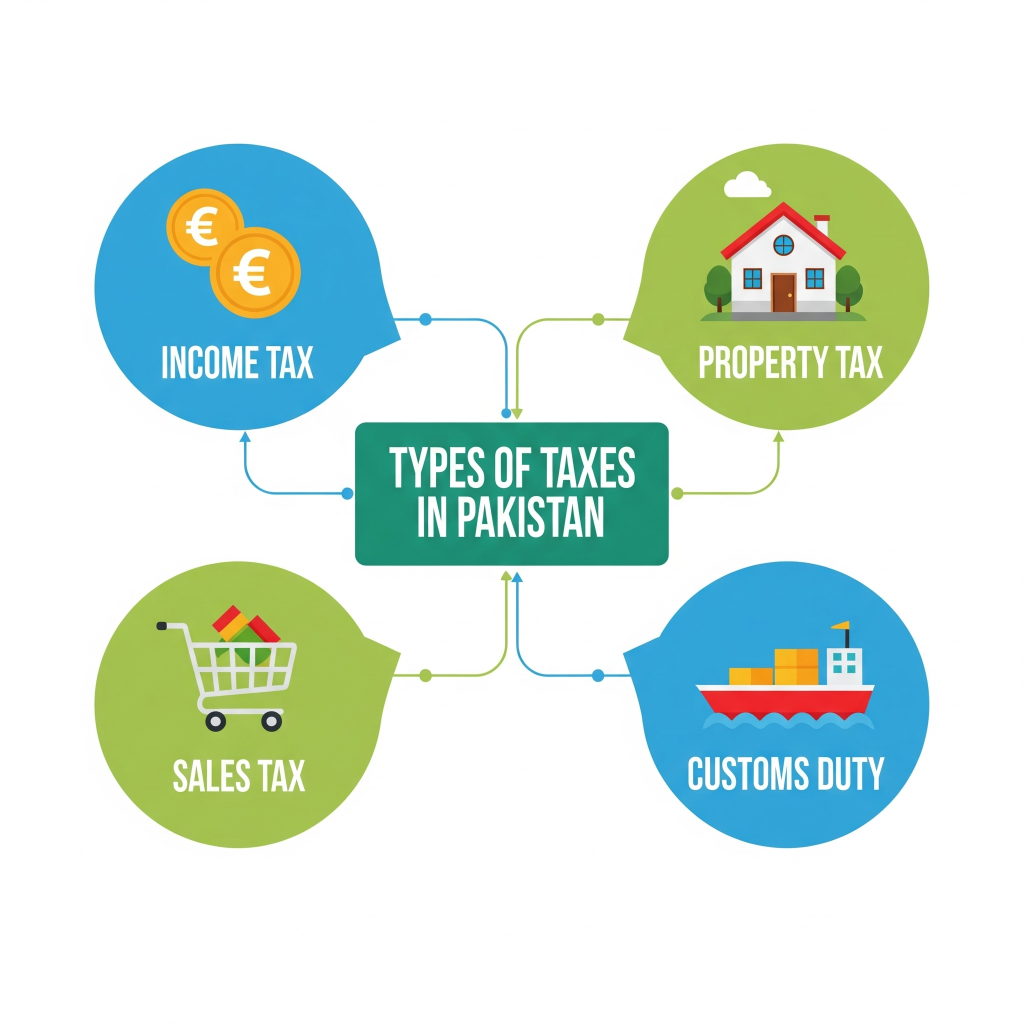
Withholding Tax in Pakistan operates under the Income Tax Ordinance, 2001, with specific sections defining each category:
| Section | Applicable To |
|---|---|
| 149 | Salary income |
| 150 | Dividend income |
| 151 | Profit on debt/bank profit |
| 153 | Payments for goods, services & contracts |
| 148 | Imports |
| 236C / 236K | Property sale/purchase |
| 231A / 231AA | Cash withdrawal & banking transactions |
Each section defines the payment type, the withholding agent responsible, and the applicable rate — which is why WHT calculation can feel so fragmented and complex.
3. Who Deducts Withholding Tax?
The responsibility to deduct falls on the "withholding agent" — the party making the payment, not the party receiving it:
- Employers — deduct on salary payments
- Banks — deduct on profit, cash withdrawals, and certain transactions
- Companies & registered businesses — deduct on payments to contractors, suppliers, and service providers
- Customs authorities — deduct at the import stage
- Registrars/Transfer authorities — deduct on property and vehicle transfers
- Telecom & utility companies — deduct on bills above certain thresholds
4. Encouraging Filing: The Filer vs Non-Filer Strategy
One of the biggest reasons for the filer/non-filer rate gap is to actively push people toward becoming compliant taxpayers. Non-filers pay significantly higher WHT — sometimes double — as a deterrent.
📊 Visual: Why the Rate Gap Exists (Illustrative Purpose)
5. Economic & Administrative Benefits for FBR
- Ensures steady cash flow for government spending throughout the fiscal year
- Reduces the administrative burden of chasing late or non-payments
- Creates third-party verified income data, useful for audits and risk profiling
- Helps FBR estimate national tax collection more predictably
- Discourages informal, undocumented cash-based transactions
6. How It Impacts You as a Taxpayer
For most individuals and businesses, WHT isn't an extra tax — it's a prepayment of tax you would owe anyway. However, it does affect:
- Cash flow: Money is deducted upfront, before you even file a return
- Compliance burden: You must track certificates and reconcile them during filing
- Refund timing: Excess WHT is only returned after annual return processing, which can take time
7. Is It Always Refundable? Adjustable vs Final Tax
| Type | Explanation | Example |
|---|---|---|
| Adjustable WHT | Can be adjusted against your annual tax liability; excess is refundable | Salary, contract payments, bank profit |
| Final Tax Regime (FTR) | Treated as full and final tax on that income; not adjustable | Prize winnings, certain export income |
8. How to Reclaim Excess Withholding Tax
- Collect all WHT certificates from employers, banks, and clients throughout the year
- File your annual income tax return via FBR's IRIS portal, declaring total income and tax deducted
- The system automatically calculates your net tax liability after WHT credit
- If excess tax was withheld, apply for a refund or request it be carried forward
- Track refund status and respond promptly to any FBR verification queries
Want to make sure you claim every rupee owed to you? Get help from Individual Tax Filing or Corporate Tax Return Filing experts at Arshad Associates.
9. Common Misconceptions About WHT
- ❌ "Withholding Tax is an extra tax on top of my income tax" — Usually false; it's a prepayment, mostly adjustable
- ❌ "I don't need to file a return if tax was already withheld" — False; filing is how you claim your refund or credit
- ❌ "All withheld tax is refundable" — False; Final Tax Regime income is not refundable/adjustable
- ❌ "Only businesses need to worry about WHT" — False; it affects salaried individuals, freelancers, and property buyers/sellers too
- ❌ "Filer status doesn't matter for a one-time transaction" — False; even one-time transactions like property or vehicle purchases are affected by filer status
10. Why You Need Professional Tax Support
Understanding why and how much tax is being withheld — and making sure you claim it back correctly — requires accurate tracking and timely filing. Arshad Associates offers complete support:
- Tax Preparation — Full WHT tracking and reconciliation
- Individual Tax Filing — Claim your refunds accurately
- Corporate Tax Return Filing — Ensure your business deducts and deposits WHT correctly
- Payroll Services — Accurate salary WHT deduction and compliance
- Sales Tax Services — Combined tax compliance support
- Financial Planning & Analysis — Plan your cash flow around WHT deductions
11. Frequently Asked Questions (FAQs)
Q1: Why is withholding tax deducted from my salary or payment?
Withholding tax is deducted to ensure the government collects income tax in advance, at the source of income, rather than waiting for taxpayers to self-declare and pay at year-end, reducing the risk of non-payment or evasion.
Q2: Can I get back the withholding tax deducted from me?
Yes, if it falls under adjustable withholding tax, you can claim it as a credit against your annual tax liability when filing your return, and any excess amount is refundable by FBR.
Q3: Why do non-filers pay a higher withholding tax rate?
Non-filers are charged higher WHT rates as a deliberate policy tool to encourage them to register with FBR and become active taxpayers, since it makes staying unregistered financially costly.
Q4: Is withholding tax the same as income tax?
Not exactly. Withholding tax is a method of collecting income tax in advance at the source; it is later adjusted against your total annual income tax liability when you file your return, unless it falls under the Final Tax Regime.
Q5: What happens if too much withholding tax is deducted from me?
If the amount withheld exceeds your actual annual tax liability, you can claim the excess as a refund from FBR after filing your income tax return, provided the income falls under an adjustable WHT category.
Related Articles You May Find Useful
Talk to Arshad Associates for accurate WHT tracking, filing, and refund support.