
Sales Tax vs. Income Tax: Understanding the Difference in Pakistan
A clear, practical guide to how sales tax and income tax differ — who pays, what is taxed, how returns are filed, and what every Pakistani business and individual should know.
Many business owners and individuals in Pakistan use "tax" as one word, but legally there is a big difference between income tax and sales tax. They are governed by different laws, filed through different returns, calculated on different bases, and enforced with different penalties. Confusing the two is one of the most common reasons for missed filings and unexpected notices.
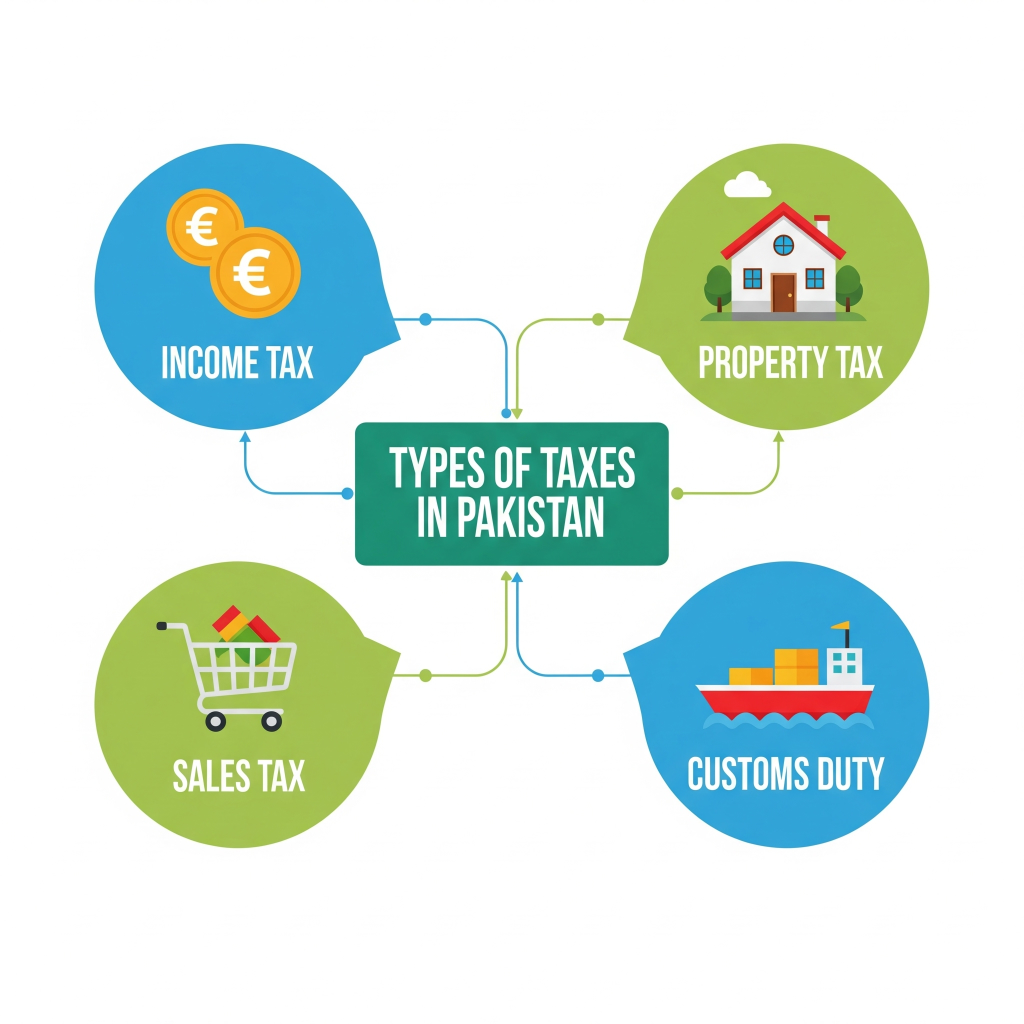
Income tax is generally charged on income earned by individuals, companies, and associations of persons. Sales tax is charged on the supply of goods and, in many cases, services, and it is collected by registered sellers from their customers. A business can easily owe both at the same time, which is why understanding each one separately matters. At Arshad Associates, we help clients manage both through our sales tax services and tax preparation support.
In this guide, we break down what each tax is, who pays it, how they are calculated and filed, where they overlap, and how to avoid the mistakes that cost Pakistani taxpayers the most.
Not Sure Which Taxes Apply to You?
Get clear, personalized guidance from our tax experts.
1. The Basics: What Are Income Tax and Sales Tax?
💼 Income Tax
A tax on the income you earn — salary, business profits, rent, capital gains, and other sources. It is a direct tax: the person who earns the income pays it.
🛒 Sales Tax
A tax on the supply of goods and services. It is an indirect tax: the final consumer bears the cost, while registered businesses collect it and pay it to the government.
The simplest way to remember it: income tax follows earnings, sales tax follows transactions.
2. How Income Tax Works in Pakistan
Income tax is governed by the Income Tax Ordinance, 2001 and administered by the Federal Board of Revenue (FBR). Taxable income is grouped under heads such as salary, income from business, income from property, capital gains, and income from other sources. Individuals and associations of persons are generally taxed on a progressive slab basis, while companies are taxed at rates set by the Finance Act.
- Who pays: Salaried individuals, business owners, professionals, companies, and other taxable persons above the applicable thresholds
- Tax base: Net taxable income after allowable deductions, exemptions, and credits
- Collected through: Withholding at source, advance tax payments, and the balance paid with the annual return
- Filing: Annual income tax return — see our individual tax filing and corporate tax return filing services
3. How Sales Tax Works in Pakistan
Federal sales tax on goods is governed by the Sales Tax Act, 1990, while sales tax on most services is administered by provincial authorities such as the Punjab Revenue Authority, Sindh Revenue Board, Khyber Pakhtunkhwa Revenue Authority, and Balochistan Revenue Authority. The standard federal rate has been 18% on taxable supplies, though specific sectors may carry different rates, so always confirm the rate that applies to your supply.
- Who pays: The end consumer bears the tax; registered manufacturers, importers, wholesalers, retailers, and service providers collect and deposit it
- Tax base: The value of the taxable supply (output tax), less eligible tax paid on business purchases (input tax)
- Collected through: Tax charged on invoices and deposited with the tax authority
- Filing: Periodic returns, generally monthly — supported by our sales tax services
Let Us Handle Both Sales Tax and Income Tax
One team, one calendar, zero missed deadlines.
4. Sales Tax vs Income Tax: Side-by-Side Comparison
| Factor | Income Tax | Sales Tax |
|---|---|---|
| Type of Tax | Direct tax | Indirect tax |
| Charged On | Income and profits | Supply of goods and services |
| Who Bears the Burden | The earner | The final consumer |
| Main Law | Income Tax Ordinance, 2001 | Sales Tax Act, 1990 and provincial service tax laws |
| Rate Structure | Progressive slabs for individuals; set rates for companies | Standard rate on taxable supplies, with reduced or special rates for some sectors |
| Return Frequency | Annual (plus advance tax and withholding statements) | Usually monthly |
| Deductions | Allowable expenses, deductions, and credits | Input tax adjustment against output tax |
| Registration | NTN | Sales tax registration (STRN) with FBR or provincial authority |
Note: Rates, thresholds, and rules change through Finance Acts and notifications. Confirm current figures before filing.
5. Who Pays What? Examples by Taxpayer Type
| Taxpayer | Income Tax | Sales Tax |
|---|---|---|
| Salaried employee | Yes — withheld by employer on salary above threshold | Pays as a consumer when buying taxable goods; does not file returns |
| Retail shop owner | Yes — on business profits | Yes, if registered — collects and deposits on sales |
| Manufacturer | Yes — on profits | Yes — charges output tax and claims eligible input tax |
| Freelancer / service provider | Yes — on professional income | May apply under provincial service tax rules, depending on the service |
| Private limited company | Yes — corporate tax on taxable income | Yes, if registered or required to register |
Your company structure also changes your obligations. Read more in our guide on private vs public company tax obligations.
6. Filing Process: Returns, Frequency & Deadlines
- Register correctly: Obtain an NTN for income tax and, if your activity requires it, a sales tax registration with FBR or the relevant provincial authority.
- Keep separate records: Maintain sales invoices, purchase invoices, bank statements, and expense records so both returns can be reconciled.
- File monthly sales tax returns: Report output tax and input tax each month and deposit any net payable by the due date.
- Pay advance tax and withhold at source: Meet quarterly advance tax and withholding obligations on salaries, contractors, and services.
- File the annual income tax return: Prepare the return with supporting documents and file it before the deadline.
- Reconcile both returns: Make sure turnover reported for sales tax is consistent with income reported for income tax.
7. Where the Two Taxes Overlap
Although they are separate taxes, FBR can compare data across both. Sales declared in your sales tax returns should broadly align with revenue in your income tax return. Large mismatches can trigger notices or audits.
Note: This chart is an illustrative guide to relative risk, not official statistics.
For a closer look at how structured planning reduces tax cost without breaking compliance, see how a manufacturing company can save millions through tax planning.
8. Common Mistakes Taxpayers Make
- Assuming that filing an income tax return also covers sales tax obligations
- Collecting sales tax from customers but failing to deposit or file on time
- Claiming input tax on purchases without valid invoices from registered suppliers
- Reporting different turnover figures in sales tax and income tax returns
- Ignoring provincial service tax requirements while focusing only on federal rules
- Missing withholding obligations on salaries and contractor payments, which sit within income tax compliance. Our payroll services and our guide to in-house vs outsourced payroll can help
9. How Arshad Associates Can Help
We support individuals, business owners, and companies with both taxes under one roof. Our corporate tax compliance consulting keeps your filings aligned, while financial planning & analysis and financial modeling help you plan the tax impact of growth decisions.
- Registration and sales tax return filing
- Individual and corporate income tax return preparation
- Withholding tax and payroll tax management
- Reconciliation between sales tax and income tax records
- Support with notices, audits, and FBR correspondence
- A single compliance calendar covering every deadline
10. Related Services & Articles
Our Services:
- Sales Tax Services
- Tax Preparation
- Individual Tax Filing
- Corporate Tax Return Filing
- Payroll Services
- Financial Planning & Analysis
- Financial Modeling
Related Articles:
11. Frequently Asked Questions
1. What is the main difference between sales tax and income tax in Pakistan?
Income tax is a direct tax on earnings such as salary, business profit, and capital gains, paid by the earner. Sales tax is an indirect tax on the supply of goods and services, borne by the consumer and collected by registered businesses.
2. Do I have to pay both sales tax and income tax?
It depends on your activity. A salaried person usually deals only with income tax. A business that supplies taxable goods or services may owe income tax on profits and also collect and deposit sales tax if registered.
3. Who is required to register for sales tax in Pakistan?
Manufacturers, importers, wholesalers, distributors, certain retailers, and many service providers must register, subject to turnover thresholds and sector rules. Services are often registered with provincial revenue authorities, so confirm which authority applies to you.
4. How often are sales tax and income tax returns filed?
Sales tax returns are generally filed monthly, while income tax returns are filed annually. Income tax also involves quarterly advance tax and periodic withholding statements for employers and other withholding agents.
5. Can late filing of one tax affect the other?
Yes, indirectly. Non-compliance in either area can affect your Active Taxpayer List status and trigger notices or audits, and the tax authority can compare the figures reported in both returns.
Get Both Taxes Right the First Time
Talk to Arshad Associates for a free consultation today.