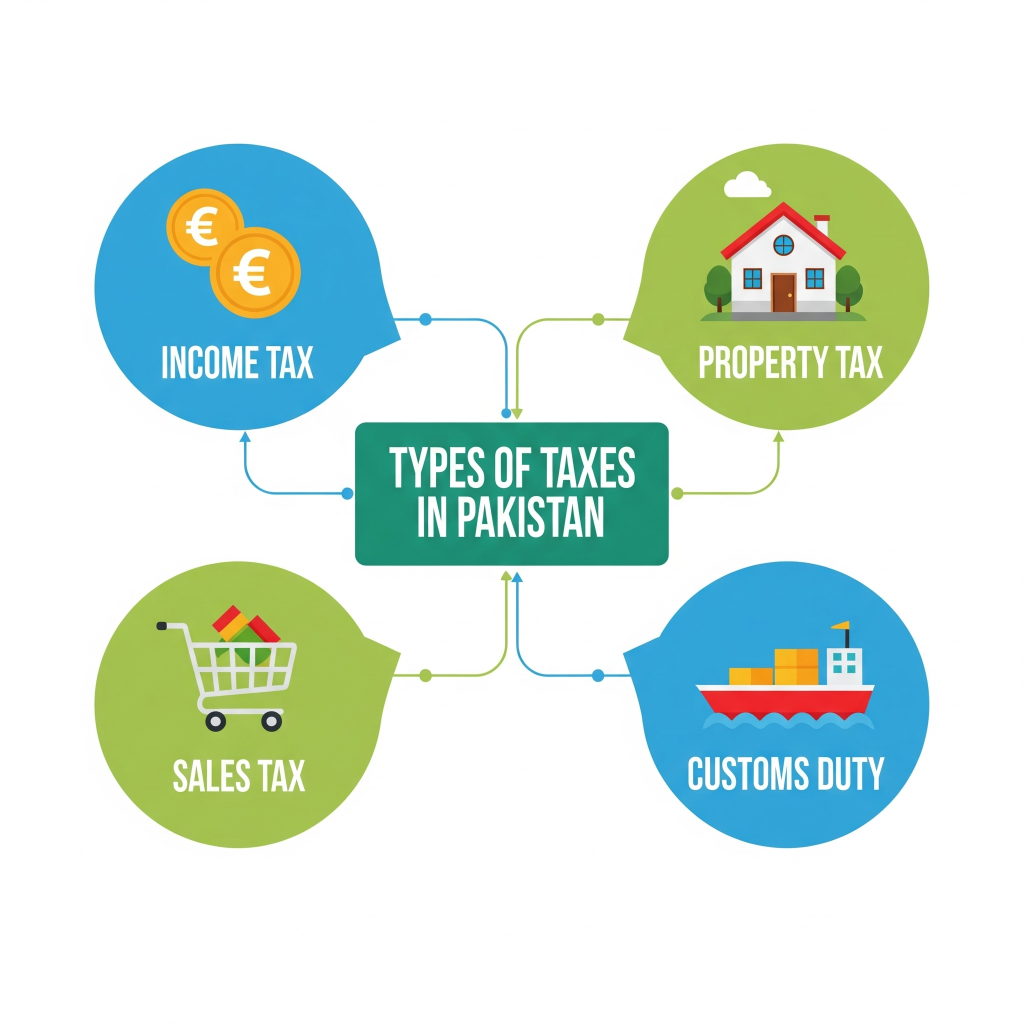

Expense Categorization for Tax Compliance: Pakistan FBR Categories Explained
Every rupee your business spends falls into some category — but not every category is treated the same way under Pakistan's tax law. Some expenses are fully deductible against your taxable income, some are only partially allowed, and others are disallowed entirely. Getting this categorization wrong is one of the most common reasons businesses either overpay tax unnecessarily or face FBR disallowances during audits.
Expense categorization isn't just a bookkeeping formality — it directly determines your taxable profit. Businesses that categorize expenses accurately and consistently throughout the year not only reduce their tax liability legitimately but also build a clean, defensible paper trail in case of an FBR audit or inquiry.
In this guide, we break down the major expense categories recognized under Pakistan's tax framework, explain which are deductible and which aren't, and share practical tips for building a categorization system that keeps you compliant and audit-ready year-round.
📑 Table of Contents
- Why Expense Categorization Matters for Tax Compliance
- Major Deductible Expense Categories
- Non-Deductible & Disallowed Expenses
- Partially Deductible / Capped Expenses
- Quick Reference: Common Expense Categories
- Documentation Requirements for Each Category
- Separating Personal vs Business Expenses
- Common Categorization Mistakes
- Building a Reliable Expense Categorization System
- Why Work With a Tax Professional
- Frequently Asked Questions
- Related Articles
1. Why Expense Categorization Matters for Tax Compliance
- Determines taxable income: Allowed deductions directly reduce the profit you're taxed on
- Audit protection: Properly categorized, documented expenses hold up under FBR scrutiny
- Prevents overpayment: Missed legitimate deductions mean you pay more tax than necessary
- Prevents disallowances: Misclassified expenses can be rejected entirely during assessment
- Improves financial clarity: Clean categorization also helps with budgeting and decision-making
2. Major Deductible Expense Categories
Under the Income Tax Ordinance, 2001, expenses incurred wholly and exclusively for business purposes are generally deductible. Common categories include:
- Salaries & Wages: Employee compensation, bonuses, and benefits
- Rent: Office, shop, warehouse, or factory rent
- Utilities: Electricity, gas, water, and internet used for business operations
- Office Supplies & Consumables: Stationery, printing, and small operational items
- Marketing & Advertising: Promotional campaigns, digital ads, and branding costs
- Professional Fees: Legal, accounting, and consultancy services
- Depreciation: Allowable depreciation on business assets per prescribed rates
- Travel & Transportation: Business-related travel, fuel, and vehicle maintenance
- Insurance Premiums: Business asset and liability insurance
- Repairs & Maintenance: Upkeep of business premises and equipment
3. Non-Deductible & Disallowed Expenses
Certain expenses are explicitly disallowed or restricted under tax law:
❌ Commonly Disallowed
- Personal expenses charged to the business
- Fines, penalties, and FBR surcharge payments
- Expenses without proper invoices/documentation
- Payments made in cash above prescribed thresholds (in certain cases)
- Non-business-related donations (unless to approved institutions)
- Capital expenditure claimed as a direct expense (should be depreciated instead)
✅ Generally Allowed (With Documentation)
- Genuine, business-related operational costs
- Expenses supported by valid tax invoices
- Salaries paid through verifiable banking channels
- Approved charitable donations within prescribed limits
- Properly depreciated capital assets
4. Partially Deductible / Capped Expenses
Some expense categories are only deductible up to certain limits or under specific conditions:
| Category | Restriction |
|---|---|
| Entertainment expenses | Must be reasonable and business-related; excessive amounts may be disallowed |
| Donations | Deductible only if made to FBR-approved organizations, subject to income-based limits |
| Vehicle expenses (personal use) | Only the business-use portion is deductible if a vehicle is used for both purposes |
| Cash-based expenses | May face restrictions or disallowance beyond certain cash payment thresholds |
| Provision for bad debts | Only allowed once specific conditions for write-off are met |
5. Quick Reference: Common Expense Categories
📊 Visual: Typical Expense Category Breakdown for an SME
*Illustrative breakdown — actual expense proportions vary widely by industry and business model.
6. Documentation Requirements for Each Category
- Valid tax invoices with supplier STRN/NTN for all purchases
- Bank statements confirming salary and vendor payments
- Lease/rent agreements for property-related expenses
- Depreciation schedules for fixed assets
- Board/management approval records for significant expenses
- Receipts and vouchers retained for at least 6 years (FBR requirement)
7. Separating Personal vs Business Expenses
One of the most common compliance risks is mixing personal and business expenses. To stay compliant:
- Maintain separate bank accounts for personal and business use
- Avoid paying personal bills directly from the business account
- If shared assets (like a vehicle) are used for both purposes, allocate costs proportionally
- Document any owner drawings clearly and separately from business expenses
This separation also makes bank reconciliation far more accurate and straightforward.
8. Common Categorization Mistakes
- ❌ Lumping all expenses into a single "miscellaneous" category
- ❌ Claiming personal expenses as business deductions
- ❌ Treating capital purchases as regular operating expenses
- ❌ Missing documentation for cash-based transactions
- ❌ Inconsistent categorization from month to month, making trend analysis unreliable
- ❌ Ignoring partial deductibility rules for entertainment or mixed-use expenses
9. Building a Reliable Expense Categorization System
- Set up a standardized chart of accounts aligned with FBR-recognized categories
- Use accounting software to automate category tagging as transactions occur
- Review and reconcile expense categories monthly as part of your monthly accounting checklist
- Train staff on proper documentation requirements for each category
- Conduct periodic internal reviews to catch misclassifications early
10. Why Work With a Tax Professional
Correct expense categorization requires up-to-date knowledge of tax law and consistent application — mistakes here can either cost you legitimate deductions or expose you to FBR disallowances. Arshad Associates offers:
- Tax Preparation — Accurate expense categorization and bookkeeping
- Corporate Tax Return Filing — Maximize legitimate deductions on your return
- Individual Tax Filing — For sole proprietors and freelancers
- Financial Planning & Analysis — Strategic insight from clean expense data
- Payroll Services — Correct salary expense categorization and compliance
11. Frequently Asked Questions (FAQs)
Q1: What business expenses are tax-deductible in Pakistan?
Expenses incurred wholly and exclusively for business purposes — such as salaries, rent, utilities, marketing, professional fees, and depreciation — are generally deductible under the Income Tax Ordinance, 2001, provided they're properly documented.
Q2: What expenses are not allowed as tax deductions in Pakistan?
Personal expenses, fines and penalties, undocumented cash payments, and capital expenditures claimed directly as expenses (instead of being depreciated) are generally disallowed under FBR rules.
Q3: How should I categorize mixed personal and business expenses?
For assets or expenses used for both personal and business purposes, such as a vehicle, only the business-use portion should be claimed as a deductible expense, and this allocation should be clearly documented.
Q4: Do I need receipts for every business expense to claim a deduction?
Yes, proper documentation such as tax invoices, receipts, and bank records is essential to support any claimed deduction, as undocumented expenses risk being disallowed during an FBR review or audit.
Q5: Are entertainment expenses fully deductible for businesses in Pakistan?
Not necessarily; entertainment expenses must be reasonable and directly business-related, and excessive or poorly documented entertainment costs may be partially or fully disallowed by FBR.
Related Articles You May Find Useful
Talk to Arshad Associates for accurate bookkeeping and maximum legitimate deductions.