Invoice & Receipt Management for Pakistan Tax Compliance
Behind every accurate tax return and every legitimate input tax claim is a simple but often underestimated requirement: proper documentation. Invoices and receipts aren't just proof of purchase — under Pakistan's tax law, they are the legal foundation that supports your deductions, your Sales Tax input tax claims, and your overall credibility with FBR. Without them, even genuine business expenses can be disallowed.
Many business owners treat invoice and receipt management as an afterthought, tossing paper slips into a drawer or losing digital copies in scattered email inboxes. But when FBR reviews your Sales Tax return or conducts an income tax audit, incomplete or invalid documentation is one of the fastest ways to lose deductions you're otherwise entitled to.
In this guide, we'll explain what makes an invoice or receipt valid under Pakistani tax law, how long you're required to retain records, the risks of poor documentation, and practical systems to keep your invoices and receipts organized and audit-ready year-round.
📑 Table of Contents
- Why Invoice & Receipt Management Matters for Tax Compliance
- What Makes an Invoice Legally Valid?
- Invoice vs Receipt: What's the Difference?
- Record Retention Requirements Under FBR Rules
- How Invoices Support Sales Tax Input Tax Claims
- Risks of Poor Invoice & Receipt Management
- Digital vs Paper Record-Keeping
- Building a Reliable Invoice & Receipt System
- Common Mistakes to Avoid
- Why Work With a Professional Accountant
- Frequently Asked Questions
- Related Articles
1. Why Invoice & Receipt Management Matters for Tax Compliance
- Supports deductions: Expenses without valid documentation can be disallowed by FBR
- Enables input tax claims: Sales Tax input tax adjustments require valid supplier invoices
- Audit protection: Well-organized records make FBR audits faster and less stressful
- Prevents supplier verification issues: Confirms transactions are with registered, active taxpayers
- Improves financial accuracy: Clean documentation supports reliable bookkeeping and reporting
2. What Makes an Invoice Legally Valid?
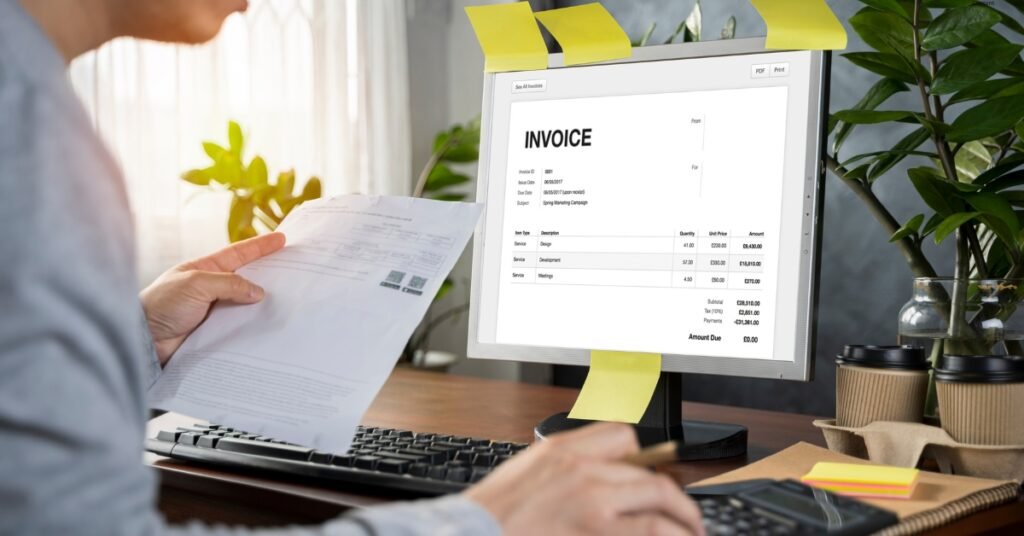
Under Pakistan's Sales Tax Act, 1990 and related FBR rules, a valid tax invoice must generally include:
- Supplier's name, address, and Sales Tax Registration Number (STRN)
- Buyer's name and registration details (for B2B transactions)
- Invoice number and date of issue
- Description, quantity, and value of goods/services supplied
- Sales tax amount charged, shown separately from the base value
- Total invoice value, including tax
3. Invoice vs Receipt: What's the Difference?
| Document | Purpose | When It's Issued |
|---|---|---|
| Invoice | Formal request for payment, detailing goods/services and tax charged | At the time of sale or delivery |
| Receipt | Proof that payment has been received/completed | After payment is made |
Both documents serve different but complementary roles — an invoice establishes what was owed, while a receipt confirms it was paid. For tax purposes, businesses generally need to retain both wherever available.
4. Record Retention Requirements Under FBR Rules
| Record Type | Retention Period |
|---|---|
| Sales & purchase invoices | Minimum 6 years |
| Bank statements | Minimum 6 years |
| Withholding tax certificates | Minimum 6 years |
| Payroll records | Minimum 6 years |
| Sales Tax return supporting documents | Minimum 6 years |
5. How Invoices Support Sales Tax Input Tax Claims
For registered businesses, valid purchase invoices are essential to claiming input tax:
- Purchase invoice must show supplier's valid STRN
- Supplier must be active (not suspended/blacklisted) on FBR's Active Taxpayer List
- Invoice details must be correctly entered in Annexure-A during Sales Tax filing
- Input tax is then adjusted against your output tax to calculate net payable amount
Learn more about how this fits into your overall filing process in our guide on Sales Tax Services.
📊 Visual: Documentation Impact on Tax Filing Accuracy
6. Risks of Poor Invoice & Receipt Management
- ❌ Disallowed expense deductions during income tax assessment
- ❌ Rejected Sales Tax input tax claims
- ❌ Increased scrutiny or extended audits due to missing records
- ❌ Difficulty resolving disputes with suppliers or customers
- ❌ Lost records due to physical damage, theft, or disorganization
- ❌ Penalties for failing to produce records during an FBR request
7. Digital vs Paper Record-Keeping
| Factor | Paper Records | Digital Records |
|---|---|---|
| Storage Risk | Vulnerable to loss, fire, damage | Backed up securely in the cloud |
| Searchability | Manual, time-consuming | Instant search and retrieval |
| Audit Readiness | Slower to compile | Fast, organized retrieval |
| Cost | Low upfront, high long-term risk | Subscription cost, lower long-term risk |
For a broader comparison of manual vs digital financial systems, see our related guide: How Should I Categorize My Business Expenses?
8. Building a Reliable Invoice & Receipt System
- Issue sequentially numbered invoices for every sale
- Collect and file supplier invoices immediately upon purchase
- Scan or photograph paper receipts and store them digitally as backup
- Use accounting software that attaches documents directly to transactions
- Verify supplier STRNs before recording input tax claims
- Reconcile invoices against bank records as part of your bank reconciliation process
- Back up digital records regularly to prevent data loss
9. Common Mistakes to Avoid
- ❌ Accepting invoices without checking supplier STRN validity
- ❌ Losing paper receipts before they're recorded digitally
- ❌ Failing to issue proper invoices for cash sales
- ❌ Mixing personal purchase receipts with business documentation
- ❌ Not retaining records for the full required period
- ❌ Relying on a single storage location without backup
10. Why Work With a Professional Accountant
Consistent, compliant invoice and receipt management protects your deductions and keeps you audit-ready — but it requires ongoing discipline and up-to-date knowledge of FBR requirements. Arshad Associates offers:
- Tax Preparation — Accurate documentation and bookkeeping systems
- Sales Tax Services — Input tax verification and monthly filing
- Corporate Tax Return Filing — Deductions backed by solid documentation
- Individual Tax Filing — For sole proprietors and freelancers
- Financial Planning & Analysis — Strategic insight from organized records
11. Frequently Asked Questions (FAQs)
Q1: What makes an invoice valid for tax purposes in Pakistan?
A valid tax invoice must include the supplier's name, address, and STRN, the buyer's details, invoice number and date, a description of goods/services, the sales tax charged separately, and the total invoice value.
Q2: How long do I need to keep invoices and receipts in Pakistan?
Businesses are generally required to retain sales invoices, purchase invoices, bank statements, and related tax records for a minimum of 6 years, as FBR can request them during this period for audit purposes.
Q3: Can I claim input tax without a valid supplier invoice?
No, input tax claims require a valid tax invoice showing the supplier's active STRN; purchases from unregistered or blacklisted suppliers, or those lacking proper invoices, generally cannot be claimed as input tax.
Q4: Are digital copies of receipts acceptable for tax purposes?
Yes, digital copies such as scanned or photographed receipts are generally acceptable as supporting documentation, provided they clearly show all required invoice details and are properly organized and retrievable.
Q5: What happens if I lose an invoice needed to support a tax deduction?
Without valid supporting documentation, FBR may disallow the related expense deduction or input tax claim during an assessment or audit, which is why maintaining organized, backed-up records is essential.
Related Articles You May Find Useful
Talk to Arshad Associates for organized, audit-ready documentation systems.